
OCPPLab
The first complete platform for EV interoperability testing
 Station F
 EDHEC Entrepreneurs
Current problem
OCPPLabTesting without hardware
Teams still depend on physical chargers, vehicles and sites to validate integrations. Testing becomes slow, expensive and difficult to reproduce.
Manual & expert-driven testing
Critical validation workflows remain manual and concentrated in a few protocol experts, creating bottlenecks across engineering teams.
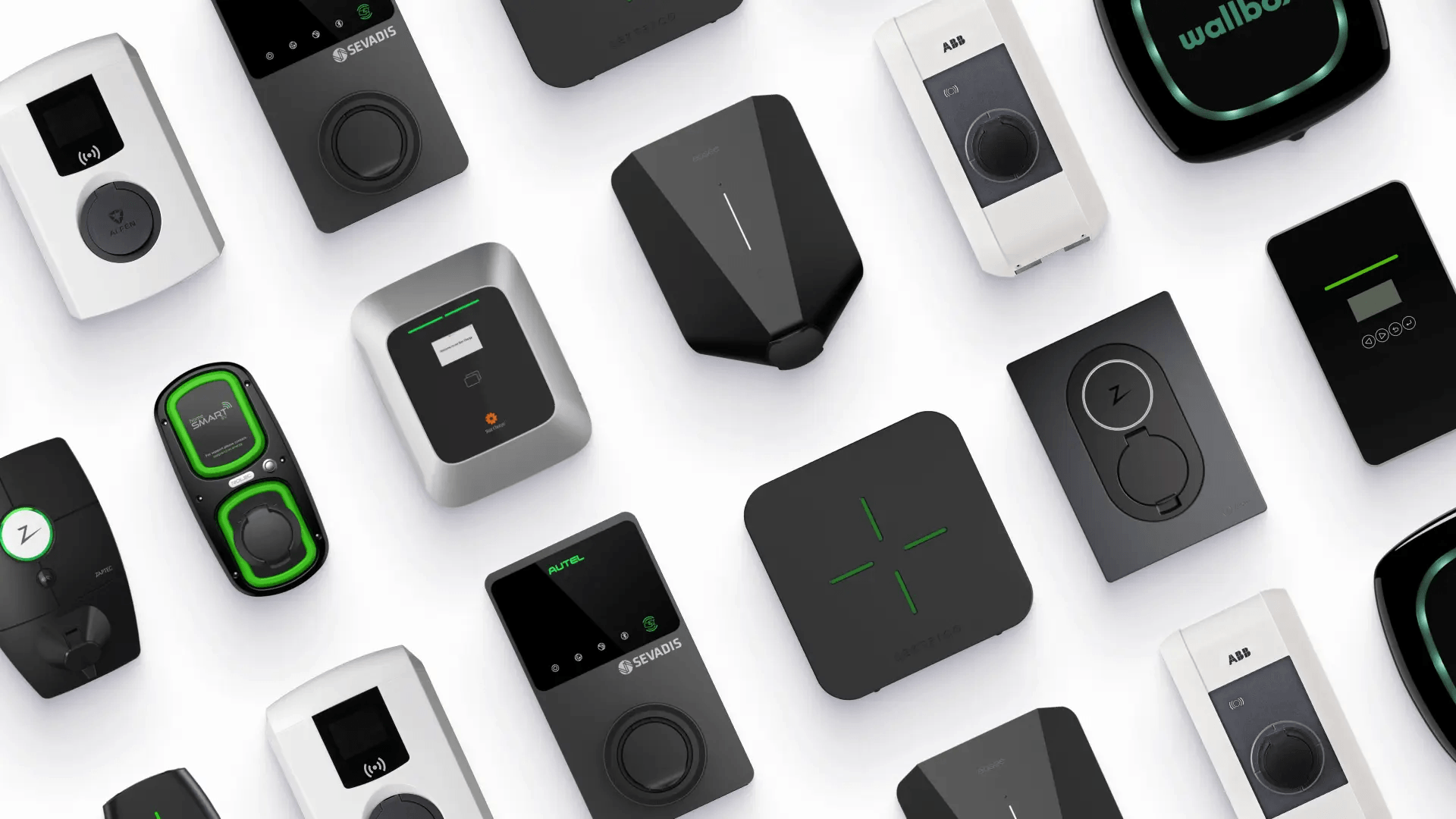
EV interoperability remains manual, hardware-dependent and difficult to scale.
Physical labs, protocol experts and fragmented tools slow down deployments, increase costs and delay integrations across the EV ecosystem.
Multi-vendor interoperability
Every charger manufacturer behaves differently. Validating dozens of firmware versions and vendor-specific implementations does not scale manually.
Roaming & partner onboarding
Integrating a new CPO, eMSP or roaming partner requires weeks of coordination, protocol validation and certification preparation.
The OCPP problem
OCPPLabEvery charger speaks OCPP. None behaves exactly the same.
Building a central system is not the hard part. Validating it across chargers, vendors and real-world scenarios is.
Hardware-dependent testing
Every validation cycle requires physical chargers, vehicles, sites and protocol experts. Testing a single workflow can take 20–30 minutes.
Vendor fragmentation
Every charger vendor interprets OCPP differently. Supporting 20+ charger brands often means maintaining 20+ different behaviors.
Incomplete validation
Most teams only test critical happy paths. Complex workflows, firmware regressions and edge cases reach production.
Production scale is untested
A charger working in the lab does not prove that 1,000+ chargers will work in production. Architecture issues are discovered too late.
Most teams never validate interoperability at production scale before going live.
The OCPI problem
OCPPLabRoaming should be plug-and-play. It isn’t.
Whether peer-to-peer or hub-based, roaming still needs to be validated before partner testing, certification and production.
Limited test coverage
Most eMSPs and CPOs validate roaming flows against a small number of partners, while production must work across many operators, chargers and real-world conditions.
Partner variability
Different OCPI versions, custom implementations, tariffs, tokens and CDR flows create interoperability gaps between partners, even when a hub is involved.
Issues appear too late
Many problems are discovered during partner testing, hub certification or production, creating delays, rework and costly back-and-forth between teams.
Certification is not validation
Passing certification does not guarantee that every charger, tariff, token, session and CDR flow will behave correctly in real-world production scenarios.
Most roaming paths are never tested until real drivers use them.
Ecosystem
OCPPLabDifferent teams. Same testing challenge.
OCPPLab helps CPOs, eMSPs, charger manufacturers and roaming platforms continuously test interoperability before issues reach production.
- CPOs — New charger brands, firmware updates and backend releases
- Roaming hubs — Partner onboarding, certification and interoperability issues
- eMSPs — Charging experiences across thousands of chargers they do not control
- Charger manufacturers — Compatibility with multiple central systems and roaming ecosystems
Complexity explosion
OCPPLabThe interoperability challenge
Millions of possible interactions
No team can realistically validate this ecosystem manually.
~240
eMSPs
Europe
3,000+
CPOs
Europe
100+
Charger brands
Europe
Firmware
versions
Continuous updates
Protocol
versions
OCPP / OCPI / OICP
= Millions of possible interactions
EV adoption is accelerating
632,423
public charging points
in the EU at the end of 2023
153,000
new charging points
added in 2023 in the EU
~2.9M
additional public charging points
needed in the EU by 2030
~410,000
new charging points per year
needed in the EU
More chargers mean more integrations, more firmware updates and more interoperability challenges.
Source: ACEA / EAFO — Charging Ahead Report 2024
The interoperability stack
OCPPLabThe real cost of traditional testing
Traditional EV interoperability testing already costs €200k+ per year
Cost breakdown
Total ≈ €230k / year
The hidden impact
€230k
hidden annual cost
2,500h
engineering time lost
1.5 FTE
equivalent workload
You already pay for interoperability testing.
You just pay for it inefficiently.
Market opportunity
OCPPLabA growing software-driven industry
OCPPLab focuses on the interoperability, validation and continuous testing layer.
TAM
2030$7.5B
Global EV Charging
Management Software Market
Europe
Estimated€1–1.5B
European Software
Opportunity
OCPPLab
Initial SOM€1–3M ARR
OCPPLab Initial SOM
3-year commercial target
Sources: Grand View Research, IEA Global EV Outlook 2024, EAFO, ACEA
What OCPPLab does
OCPPLabOne platform for the entire interoperability lifecycle.
From virtual chargers and automated workflows to roaming validation, observability, CI/CD and multi-environment routing.
Virtual charger fleets
Simulate hundreds or thousands of chargers without hardware.
Automated workflows
Run repeatable OCPP and OCPI test scenarios on demand.
Roaming validation
Prepare partner onboarding, OCPI certification and roaming flows.
Observability & debugging
Centralize logs, diagnose failures and understand protocol behavior.
Multi-brand compatibility
Validate charger brands, firmware versions and protocol variants.
Continuous integration
Embed interoperability testing into CI/CD pipelines and validate every release automatically.
Multi-environment routing
Connect one charger to multiple backends across development, testing and production.
Edge case simulation
Validate rare, complex and failure scenarios before production deployment.
Scalability testing
Stress-test charging infrastructures and large fleets under realistic load.
Scalability — scale without risk
OCPPLabOne charger proves nothing at scale
Most teams start with one charger and a few scenarios — but reality becomes hundreds then thousands of chargers across many sites and customers, all active at once. Validating with a single physical charger says nothing about whether the architecture survives that load.
Simulate volumes hardware can’t
OCPPLab simulates traffic impossible to reproduce physically: spin up hundreds or thousands of chargers, drive traffic peaks, and test real backend load and large-scale behaviour before growth exposes the weaknesses.
Validate architecture before reality does
Surface backend design flaws and architecture limits early — fewer costly redesigns, less technical debt, and the confidence to grow safely. Testing one charger says nothing about your ability to manage one thousand.
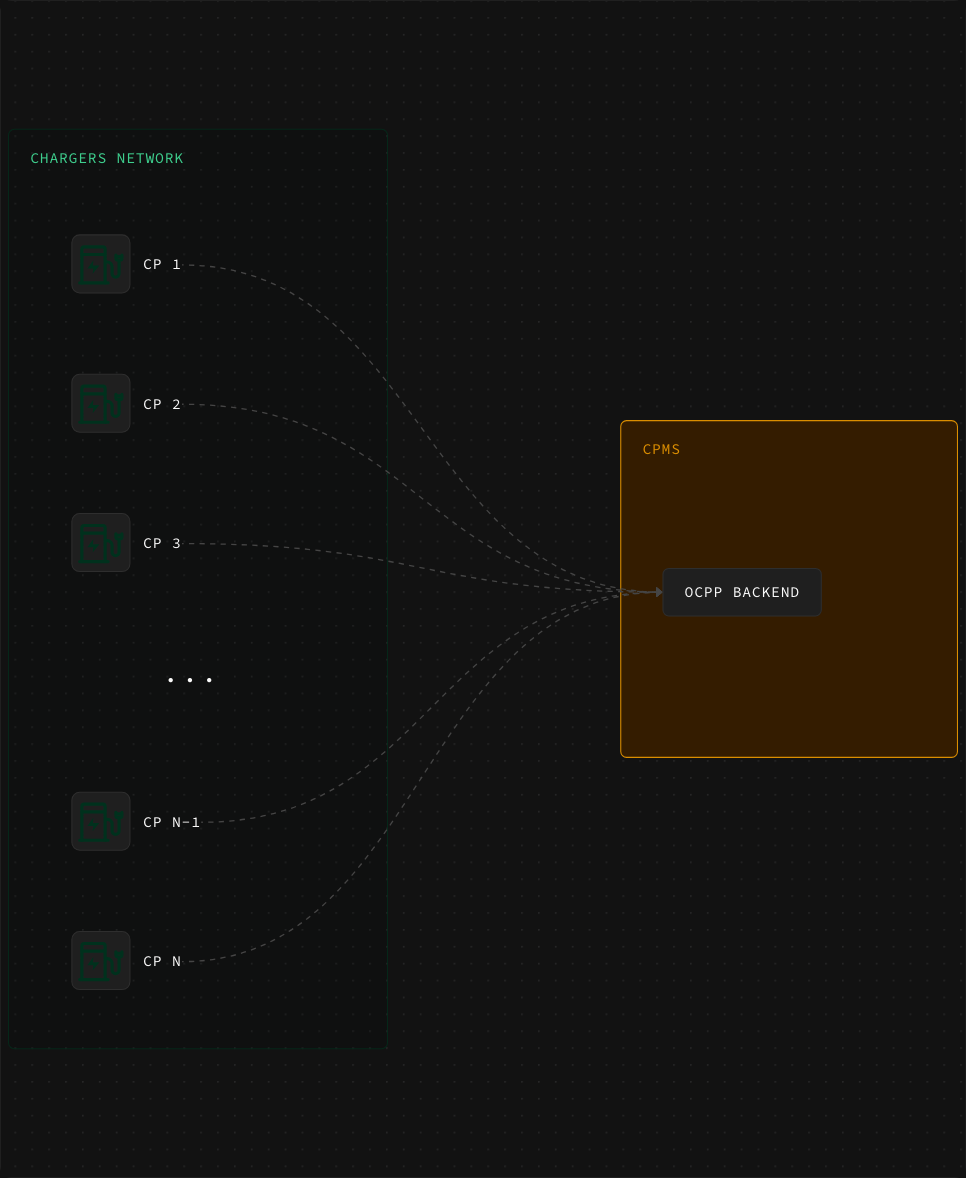
TEST AND STRESS YOUR BACKEND WITH 10K+ CHARGERS
Proxy — one charger, every backend
OCPPLabOne backend is a blind spot
A physical charger talks to one backend at a time, so when something breaks you can’t tell whether it’s the charger or the CPMS.
One charger, many systems
Route a single charger to dev, test and production at once — compare environments and benchmark against reference systems live.
Faster, surer debugging
Spot behaviour differences instantly and deploy with confidence, across virtual, physical and hybrid setups.
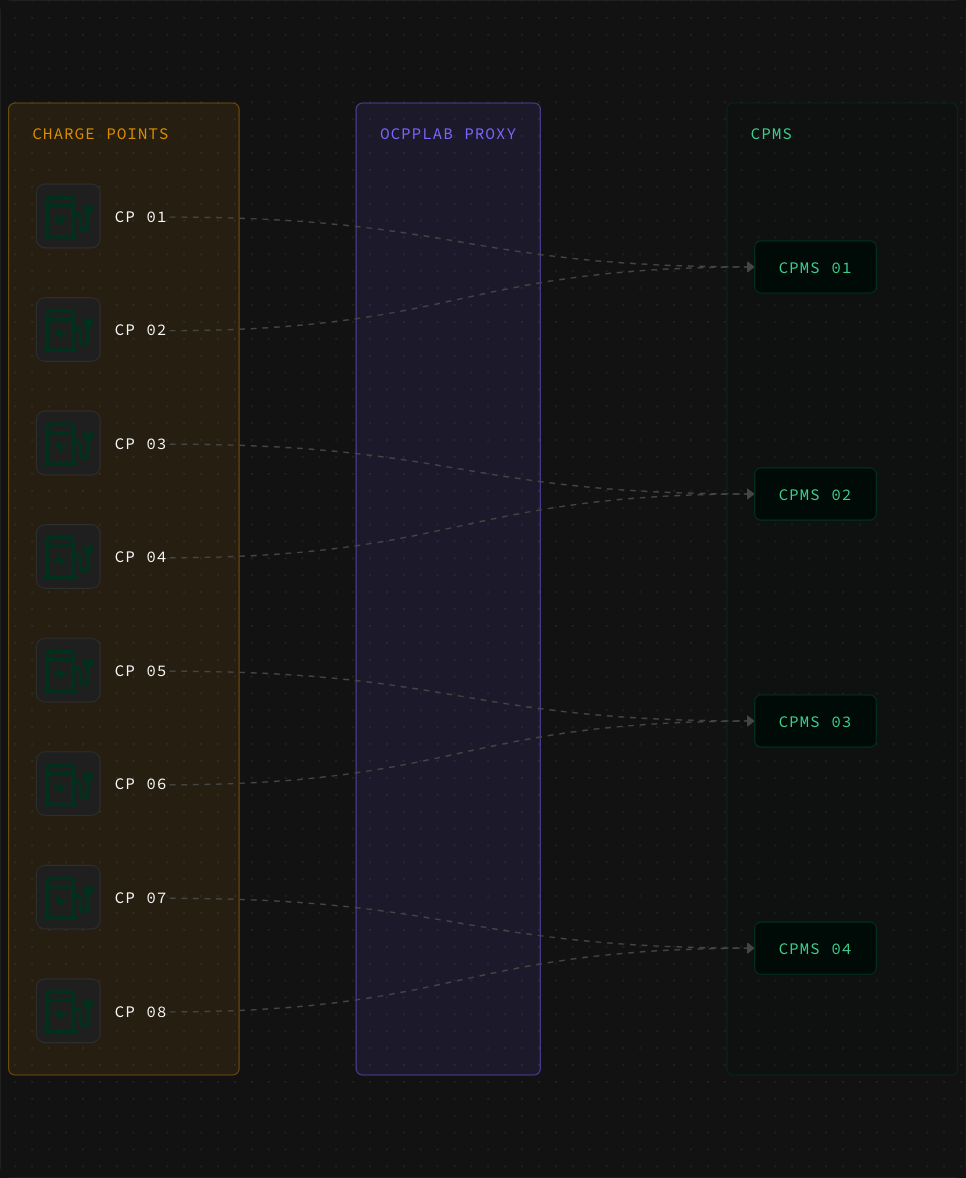
EVERY TWO CHARGERS CONNECT TO ONE CPMS VIA THE PROXY
OCPI roaming + pre-certification testing
OCPPLabPlug-and-play partners
Register an eMSP or CPO once. OCPPLab runs the Credentials handshake, version negotiation and partner directory — all from the dashboard.
2.1.1 + 2.2.1 side by side
Run partners on different OCPI versions on the same network without hand-writing translation layers — the platform negotiates per partner.
Arrive certification-ready
Simulate a multi-operator roaming ecosystem to validate inter-operator behaviour before certification — reach roaming hubs with fewer failed sessions.
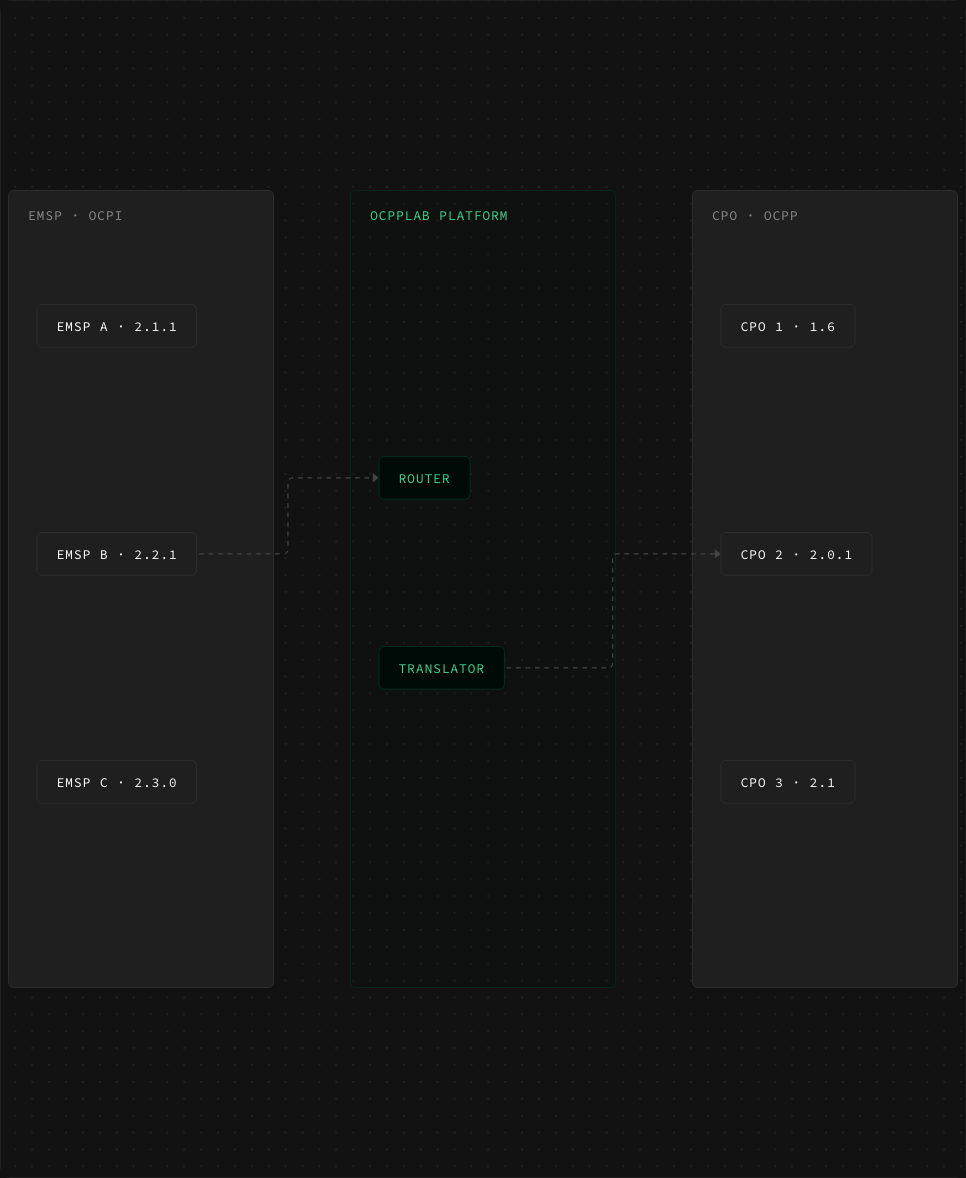
ONE PLATFORM CONNECTS EVERY eMSP TO EVERY CHARGER
OCPI roaming scalability
OCPPLabOne eMSP, every CPO network
An eMSP, app and wallet reach CPO networks 1, 2 and 3 through a single OCPPLab proxy — no point-to-point integration per partner.
Every OCPI version, end to end
The proxy speaks OCPI 2.1.1, 2.2.1 and 2.3.0 to partners and OCPP 1.6, 2.0.1 and 2.1 to networks — version gaps reconciled in one place.
Tokens, billing & CDRs in one path
Token A/B/C auth, billing and CDR delivery run through the same proxy, so adding a CPO network scales the roaming footprint without rewiring.
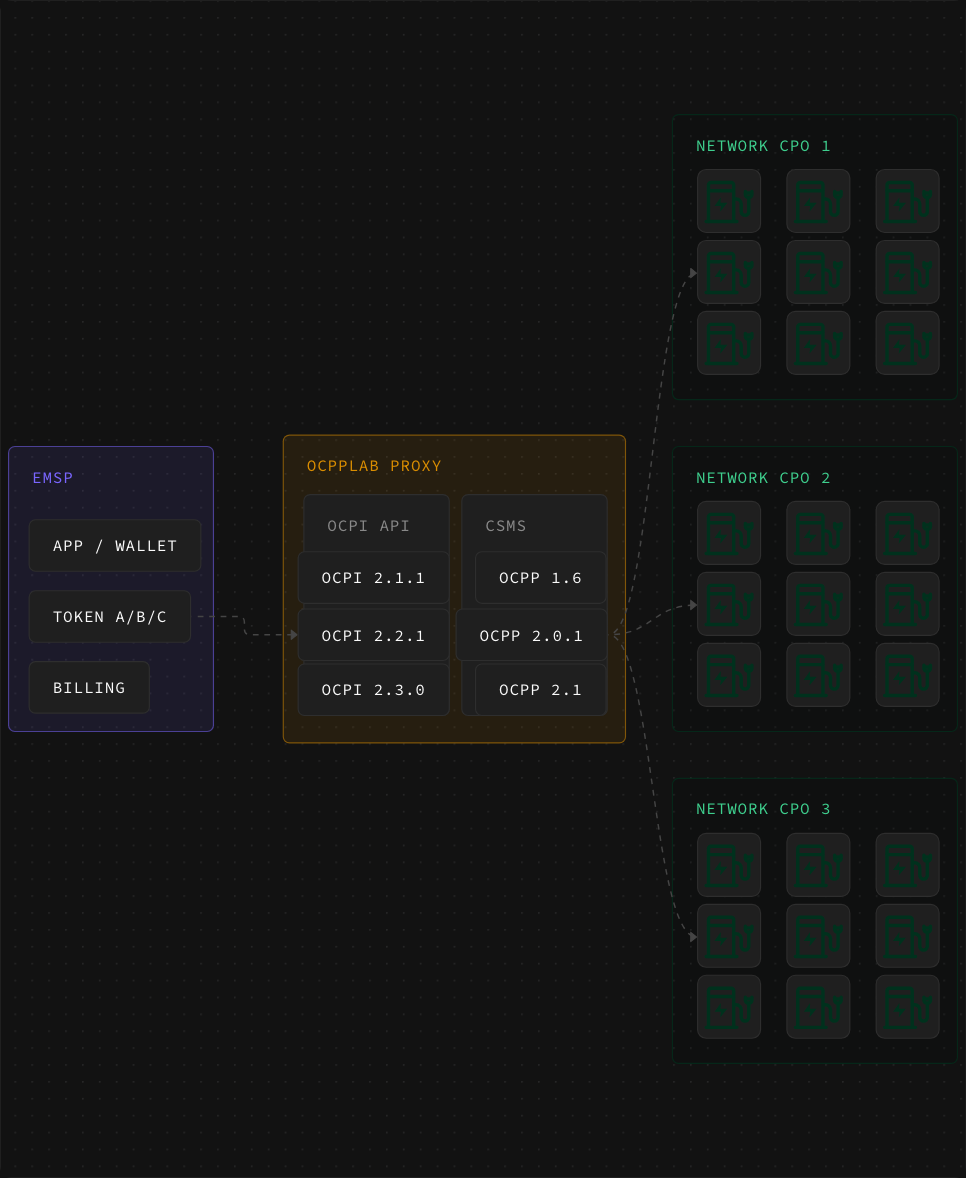
ONE PROXY BROKERS EVERY eMSP TO EVERY CPO NETWORK
Build and test without hardware
OCPPLabVirtual charger fleets
Spin up chargers that speak real OCPP — no procurement, sub-minute spin-up, every edge case exercised in CI before production hardware.
Build & replay workflows
Compose multi-step scenarios visually — handshake → tokens → commands, with waits and config changes — and replay them identically on every run.
Multi-brand at scale
Replay every scenario across hundreds of charger models and load-test in CI, so one fix never silently breaks another brand.
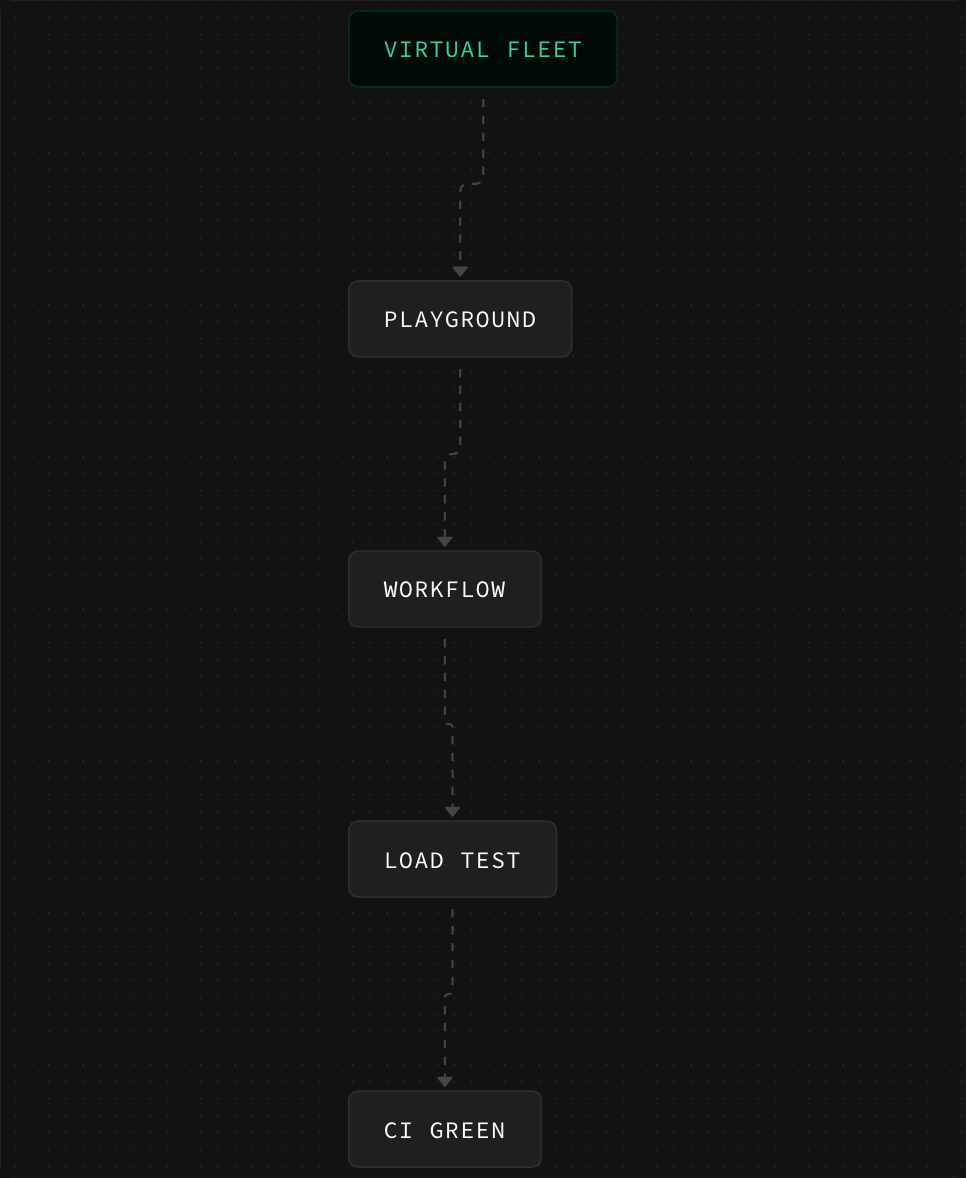
TEST EVERY OCPP & OCPI SCENARIO BEFORE PRODUCTION
An SDK for every stack
OCPPLabTyped OCPP & OCPI clients
Fully-typed SDKs for OCPP 1.6 / 2.0.1 and OCPI 2.1.1 / 2.2.1 — wire a charger, backend or roaming partner into your stack in minutes, not weeks.
The platform, as a library
Call sessions, commands, tokens and CDRs straight from your code. The same proxy, monitoring and roaming engine, exposed as a dependency you install.
From snippet to production
Copy an example from the docs, run it against virtual chargers, and ship — auth, retries and OCPI version negotiation handled for you.
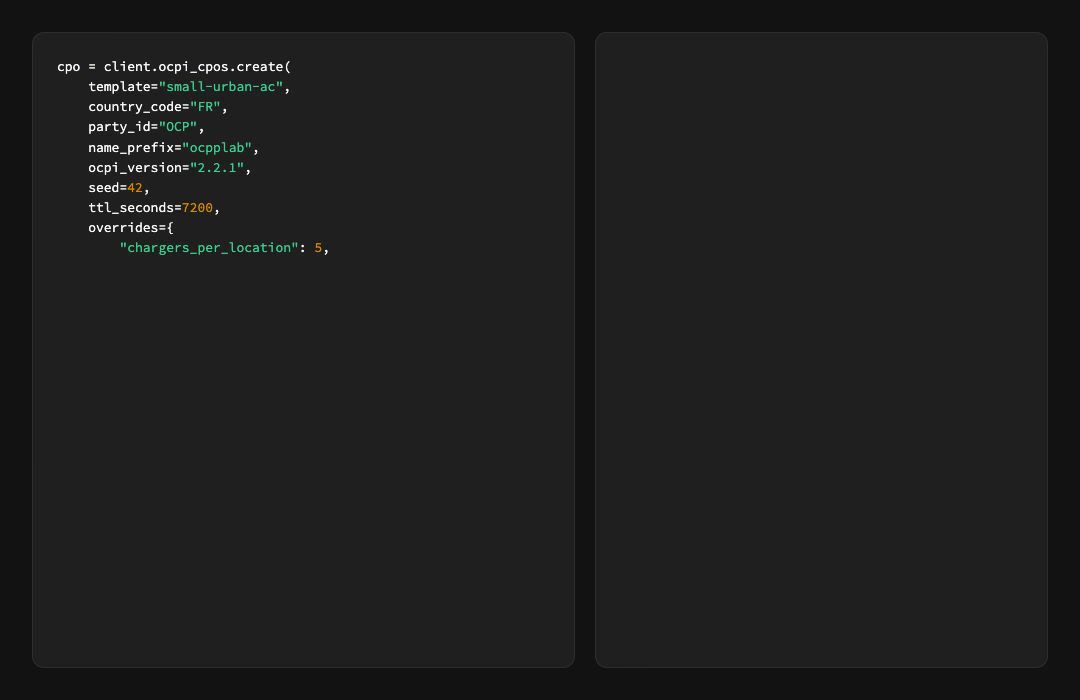
ROI & business impact
OCPPLabFrom manual testing to continuous validation
Without OCPPLab
- Hardware-dependent validation
- Manual testing and regressions
- Repeated partner integrations
- Production-discovered issues
- Slow charger onboarding
- Expert-driven workflows
With OCPPLab
- Virtual charger environments
- Automated test workflows
- Continuous interoperability testing
- Earlier issue detection
- Faster partner onboarding
- Scalable validation across teams
Projected impact
€200k+
Estimated annual interoperability testing costs
(illustrative scenario based on internal modelling)
Days → Minutes
Validation cycles accelerated through automation
10x+
Potential ROI
(compared to traditional hardware-dependent testing workflows)
More coverage. Less effort. Earlier detection.
Error rate — fewer failed sessions
OCPPLab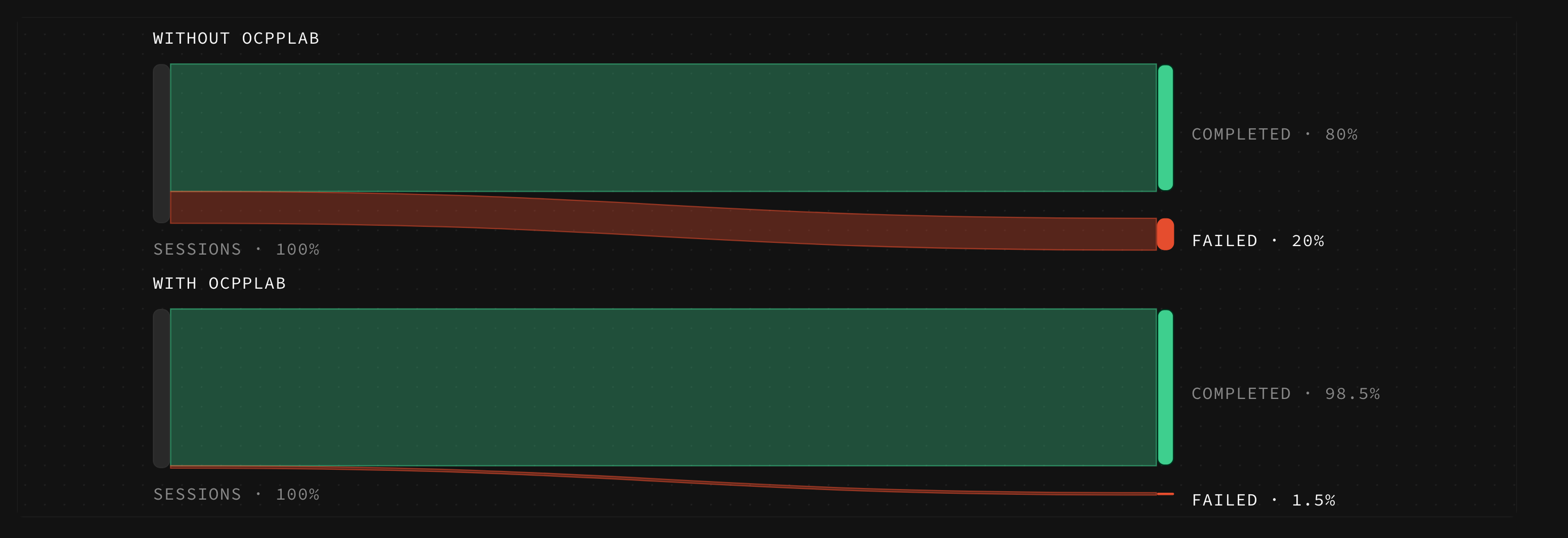
TRACKING EVERY FAILURE TAKES THE ERROR RATE FROM ~20% TO UNDER 2%
Failed sessions are the silent tax
Roughly one in five public charge attempts fails — a car that never charges, a driver who never comes back. Without instrumentation that error rate is invisible: it shows up as churn, not as a number on a dashboard.
Every failure traced to a cause
Live monitoring and AI debugging classify each failed session the moment it happens — auth reject, connector fault, backend timeout, roaming reject — so failures become attributable events instead of anonymous drop-offs.
Drive the error rate down
Turning blind failures into tracked, root-caused events is what moves the needle: teams running on OCPPLab take failed sessions from ~20% to under 2%, and keep them there.
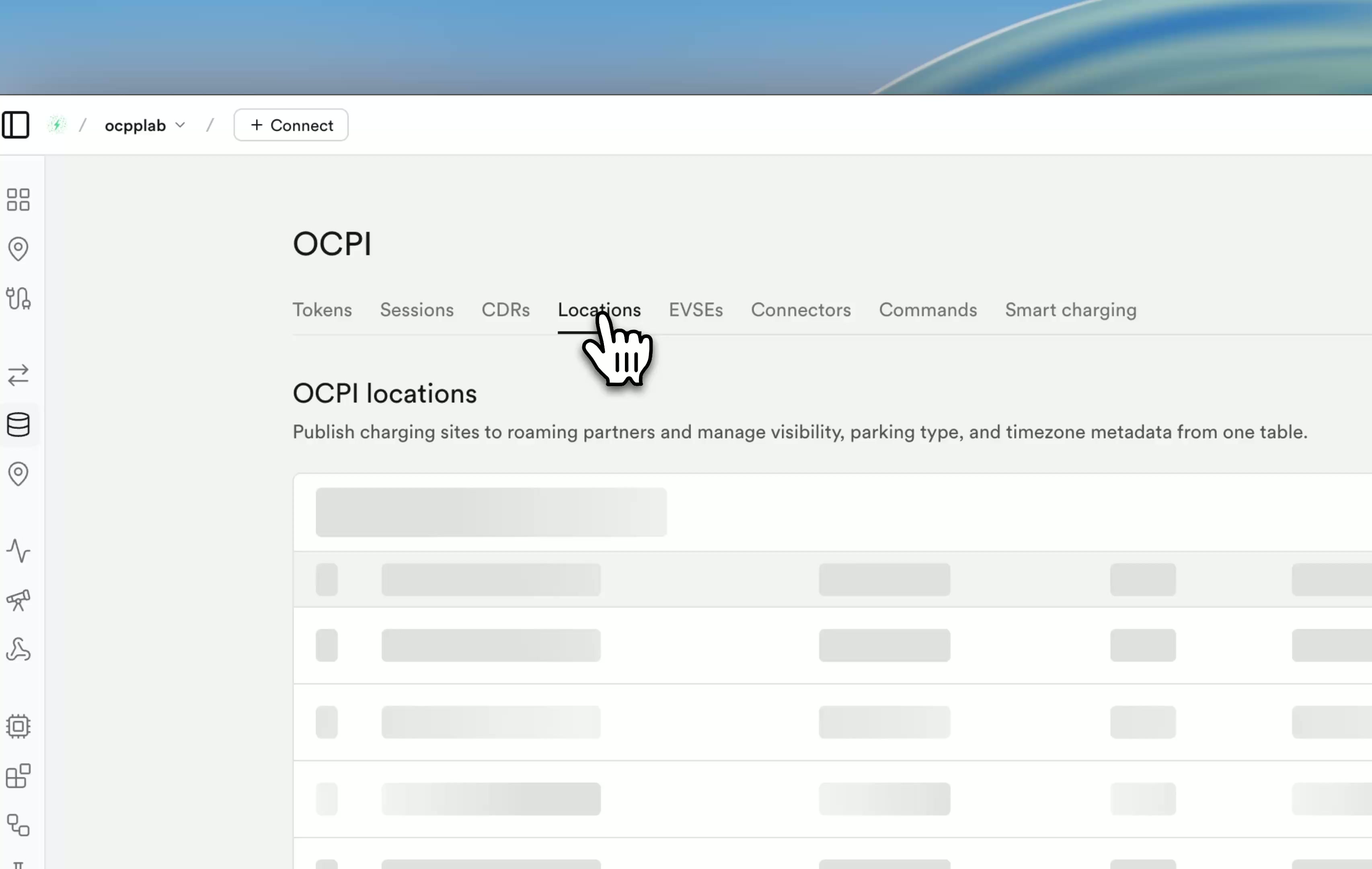
Demo — Charging Management Platform (Private beta)
OCPPLabSilent walkthrough of the OCPPLab charging management platform: virtual chargers, protocol workflows, and live session debugging.
Early design partner program
OCPPLabBuild the future of EV interoperability testing with us.
We're working with a limited number of CPOs, eMSPs and charger manufacturers to define the next generation of interoperability validation.
You get
- Early access — up to 2 months free
- Dedicated onboarding
- Continuous support during the pilot
- Direct founder access
We get
- Real-world feedback
- Product validation
- Use cases & workflows
- New testing scenarios
- Feature requests
Build the platform with us, not after us.
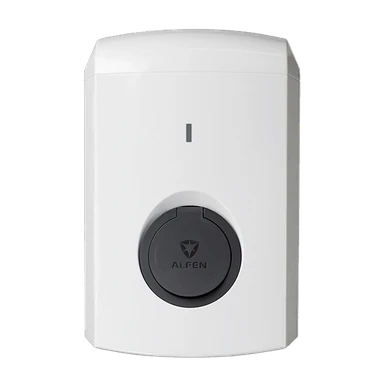
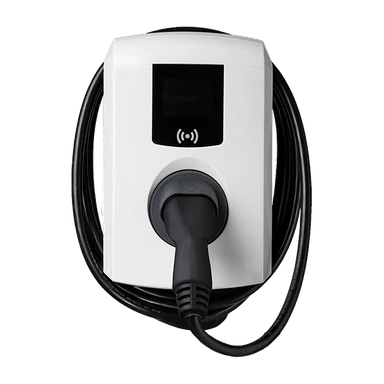
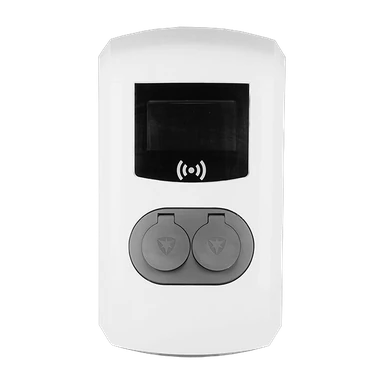
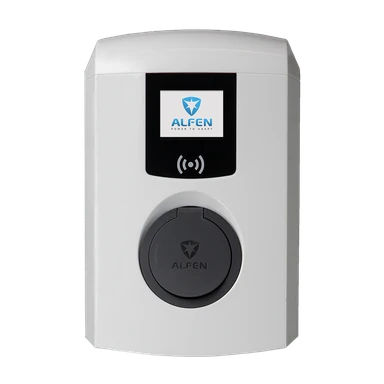
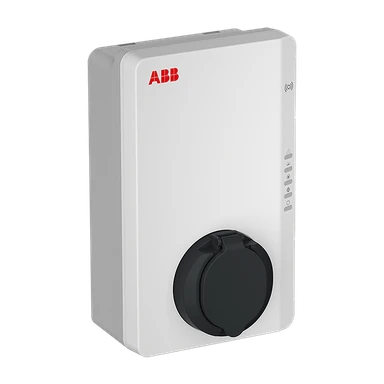
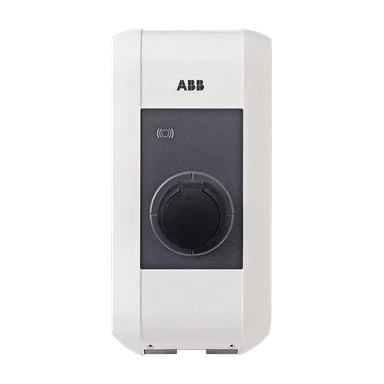
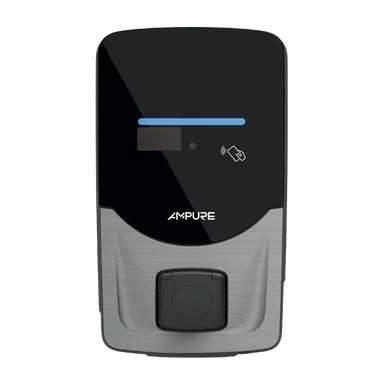
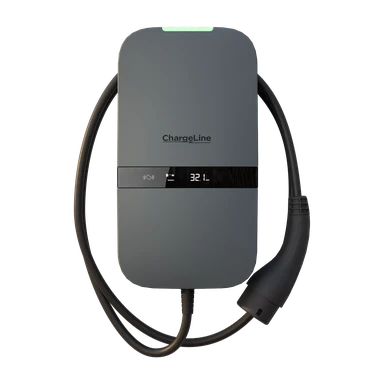
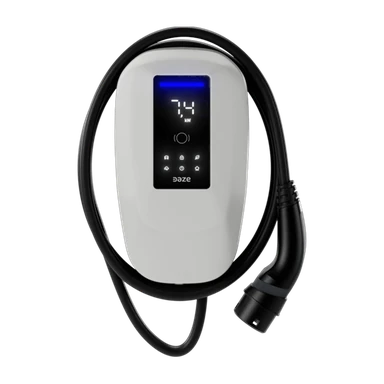
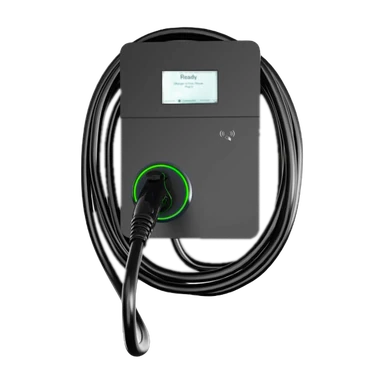
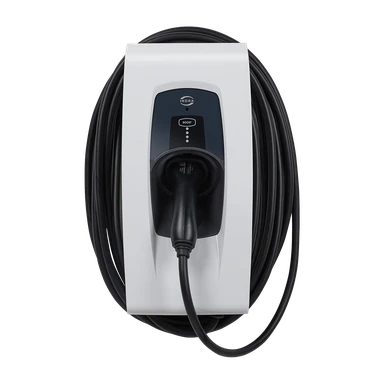
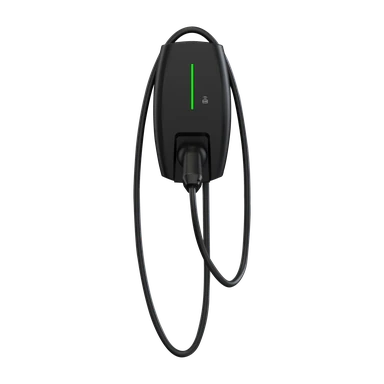
- Alfen EVE Single S Line
- Alfen Eve Single Pro-line
- Alfen Eve Double Pro-line
- Alfen Eve Single Plus
- ABB Terra AC Wallbox
- ABB EVLunic Basic Plus
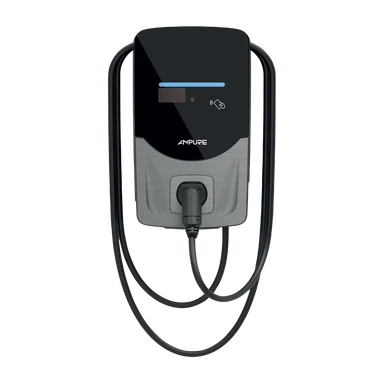
- Ampure Boost ERK Socket
- Ampure Boost Cable
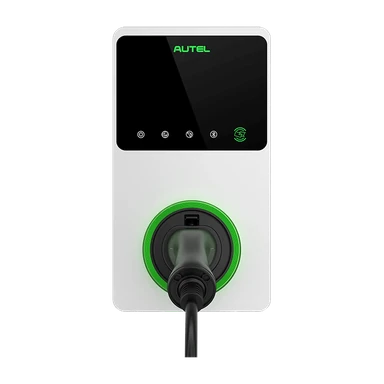
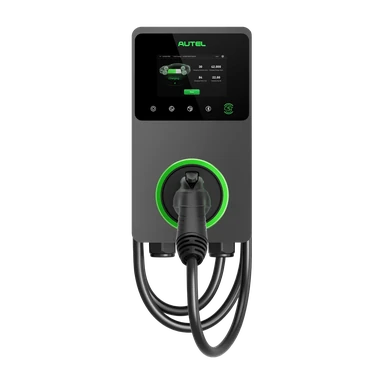
- Autel MaxiCharger
- Autel AC Elite
- Beny BCP-A2N-P
- Chargeline Home
- DazeTechnology Share Tethered
- FratcalEV FR-48
- Indra Smart Pro
- Malmbergs Evon 11kW WiFi
Who we are
OCPPLabWho we are

Oumaima Bounouadar
Co-founder & Data Scientist
5+ years in AI, data and software products. Focused on AI and machine learning for eMobility, product strategy and go-to-market, automation, analytics and decision systems.

Yassine Elazrak
Co-founder & Staff Engineer
6+ years in software engineering. Focused on OCPP and OCPI platform development, distributed systems and cloud infrastructure, and EV charging software architecture.
“This problem showed up firsthand — this is the platform operators wished existed.”


Our vision
OCPPLabBuild once. Validate everywhere.
Contact
OCPPLabValidate Your Charging Stack Together.
Schedule a walkthrough and see how OCPPLab can test OCPP, OCPI, roaming and production-scale edge cases before they hit your users.